Korean Punk, One Piece a Day: The 90s Hongdae Scene Archive
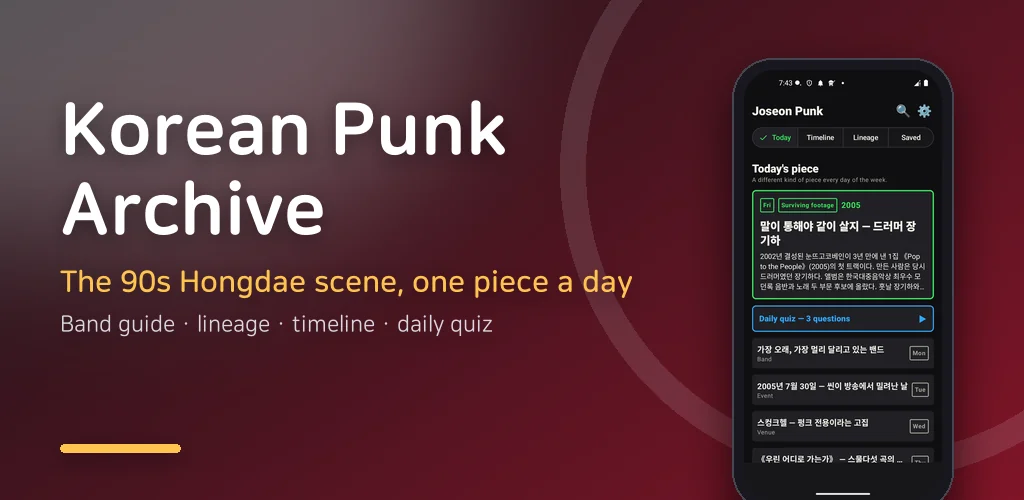
Between 1995 and 1999, Korean punk was played in basements in Hongdae, Seoul, almost every weekend. Albums came out. A compilation with eighteen tracks was released in 1999 and gave the scene a name. And today, on Wikimedia Commons, there is not a single photograph of any of it.
That gap is the reason for this app. Formation years differ from one source to the next. Some bands have no member list anywhere. Play a track on YouTube and it may be credited to an anonymous "Topic" channel rather than the band. Joseon Punk is my attempt to gather what still exists about the Korea 90s indie and Korean punk scene, one verified piece at a time, and hand you one of them every day.
▶ Get it on Google Play (free): https://play.google.com/store/apps/details?id=com.thefacegood.joseonpunk
How little of Korean punk survived, in numbers
Here is what the archive holds right now: 36 bands, 51 people, 258 tracks, 9 venues, and a timeline that starts in 1993. For each band the app also states plainly how much of its record survives — official video still exists, audio only, or the record has effectively been erased. That last label appears more often than I would like. It is not a design choice; it is an honest count.
The name comes from the 1999 compilation itself, which was titled to mean "our own punk, beyond the Western form". If you already know the scene, you know which label put it out. If you do not, that is exactly the kind of thing the app tells you.
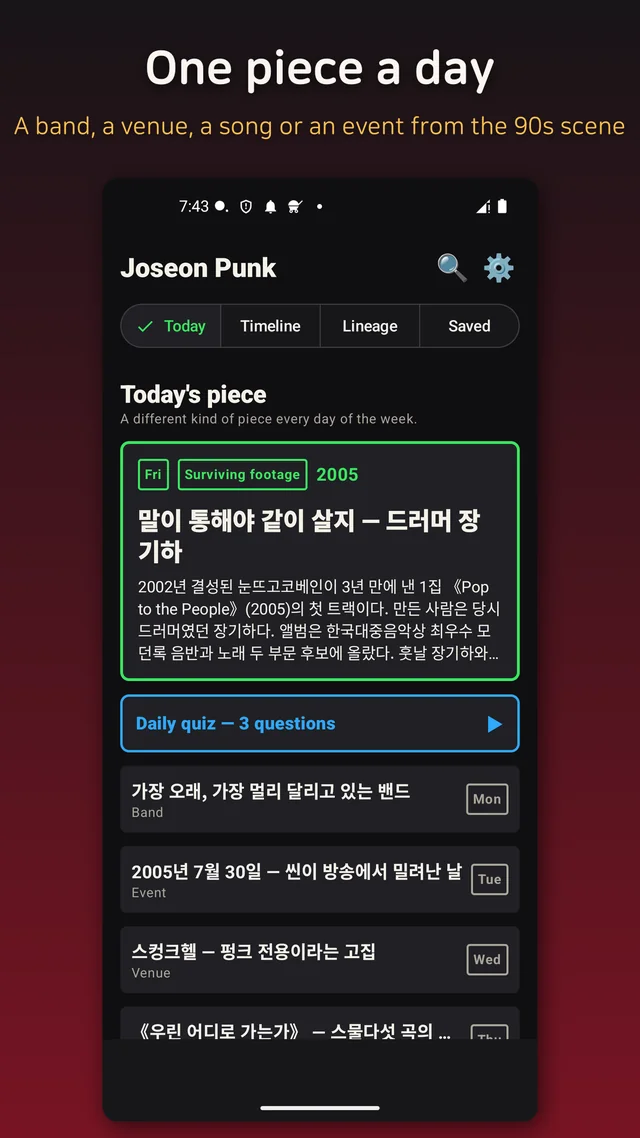
One piece a day, a different kind for each weekday
Opening a wall of encyclopaedia entries is a good way to never read any of them. So the home screen gives you one piece, and the kind rotates with the weekday: a band on Monday, an event on Tuesday, a venue on Wednesday, an album on Thursday, a track with surviving footage on Friday, a lost band on Saturday, and a retrospect on Sunday. Reading the day's piece takes about a minute. There is an optional 10 PM notification so it becomes a habit rather than something you forget about.
Everything works offline except video playback. There is no sign-in and no personal data collected.
Bands end, people continue: the lineage view
The part I spent the most time on is the people lineage. Bands in this scene broke up constantly, but the people did not vanish. A bassist from a mid-90s trio became a name in electronic and film music. A vocalist went abroad to study and came back as a sound artist with a major museum award. Two members left one band's debut line-up and founded another that outlasted it. Open a band and you can follow where each member went afterwards; open a person and you can walk back through every band they passed through. It reads like a net rather than a list, which is what the scene actually was.
Timeline, band guide, search and a daily quiz
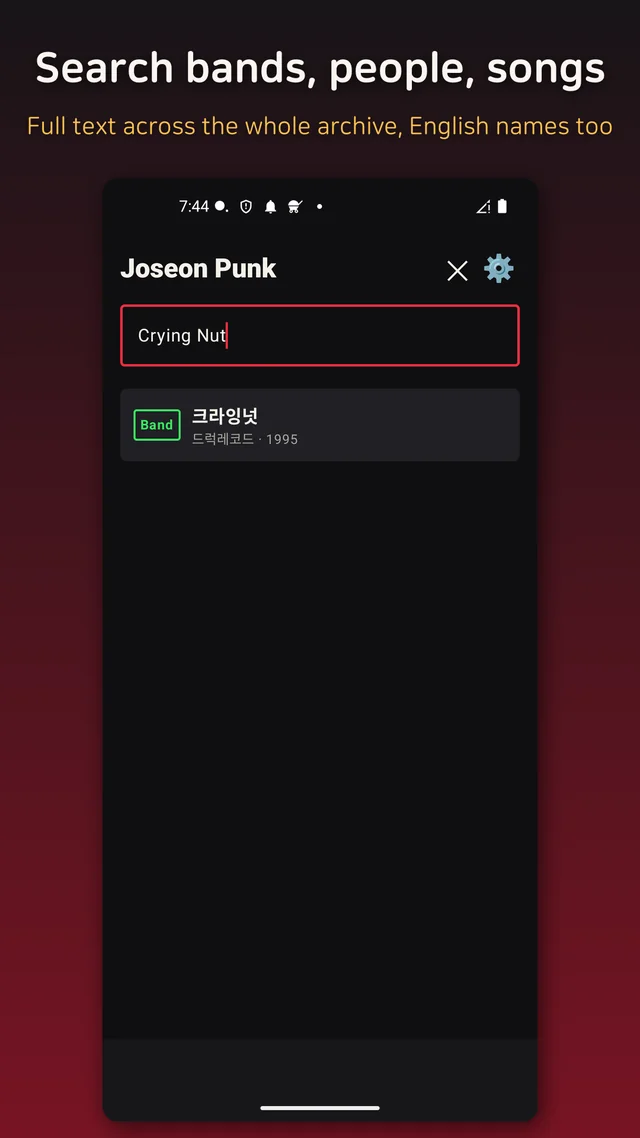
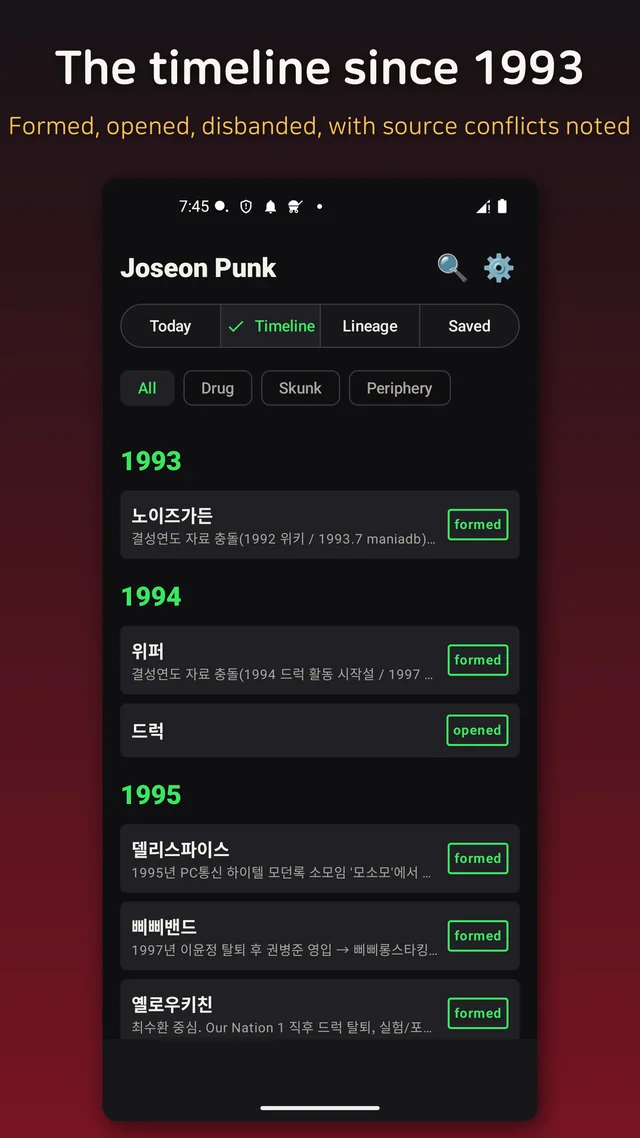
The timeline runs from 1993 to the 2020s — formations, debuts, break-ups, venue openings and closures, and the events in between — and can be filtered by the labels and circles that defined the era. The band guide holds fact-checked notes from formation to the present day. Full-text search covers band names, track titles, the note text and people's names, so you can type a producer's later alias and land on the punk band he started in.
For the trivia crowd there is a daily quiz of three questions, plus favourites and a share card for the piece you want to send to someone who was there.
The rule: never make anything up
The scene left few records, so the archive has one principle: if it cannot be confirmed, it is not stated as fact. Where sources disagree on a year, the entry says "sources differ" and shows the candidates instead of picking one. Anything that lost its source was removed. Track IDs were checked by hand, because this corner of music is riddled with name collisions — a commercial music database still tags a German band's songs under the name of a Korean one.
For the same reason the app contains no lyrics, no album covers, no artist photos and no band logos. Video plays only through official YouTube embeds. It is an unofficial, fan-made archive with no ties to any artist, agency or label, and I would rather it be thin and right than thick and wrong.
Who this is for
- Anyone curious about the history of Korean punk and where it came from
- K-indie listeners who want to know what came before the bands they follow now
- People who were in Hongdae in the late 90s and want to check their memory against the record
- Music history readers who prefer a verified minute a day to an unverified hour
Download (Google Play, free): https://play.google.com/store/apps/details?id=com.thefacegood.joseonpunk
※ Made by a fan, not by anyone in the industry: no artist, agency or label is involved with or endorses this archive. Spotted an error, or want something removed? Write to thefacegood1@gmail.com.
If you find an error, or you have a source for something the archive marks as unknown, please tell me. In a field this thinly documented, one reader with an old flyer is worth more than a week of my searching.


Comments
Post a Comment