Random Bibimbap Challenge Rules, and the App That Runs It
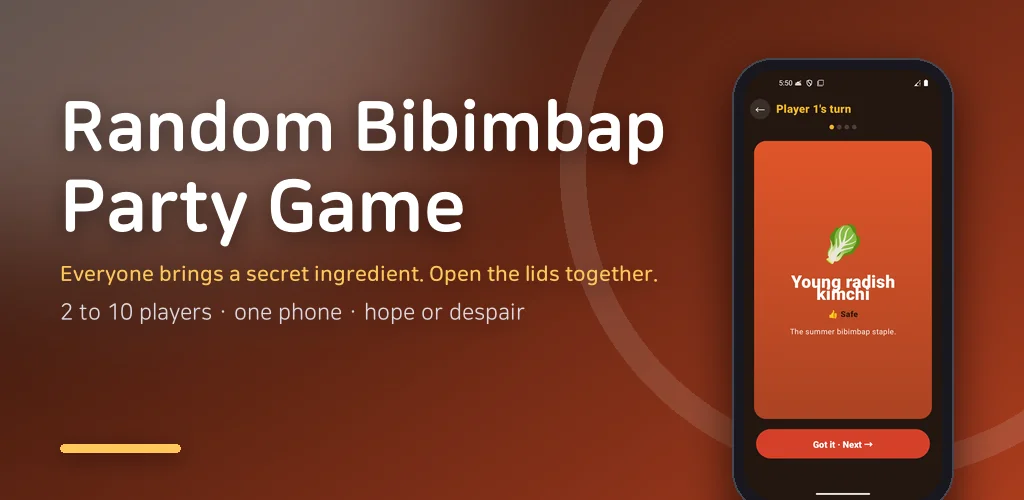
The first time my office tried the random bibimbap challenge, six people showed up with a total of three tubs of kimchi, one fried egg, a bag of lettuce, and no rice. We ate it anyway, out of a mixing bowl, with a sense of shared defeat. It was a great lunch. It was also the reason I spent the following weekend writing an app, because the second time it happened it was not funny anymore.
If you have not seen the trend: everyone brings one ingredient, in secret, and the group mixes them all into one enormous bowl of bibimbap. The whole appeal is the reveal — you do not know what you are eating until the lids come off. The whole risk is that nobody coordinated, so you get a bowl that is 80% one thing.
▶ Get it on Google Play (free): https://play.google.com/store/apps/details?id=com.thefacegood.randombibim
What the random bibimbap challenge actually is
Bibimbap is the Korean rice bowl where a pile of separate toppings — seasoned vegetables, a protein, an egg, a spoon of gochujang chili paste and a splash of sesame oil — gets stirred together at the table. It is a naturally communal dish, which is why the random version became a thing at school clubs, office lunches, church retreats and family gatherings: each person contributes one part, and "who brought this?" starts every conversation.
The joy is the surprise, and the surprise is exactly what a group chat destroys. The moment someone types "I'll bring rice, you bring meat", the reveal is gone. So you need a way to assign roles without anyone seeing anyone else's.
The one problem: overlaps and gaps
Every failed random bibimbap I have heard about fails in one of two ways. Overlap: five people bring the same thing. Gap: nobody brings rice, or sauce, or anything that isn't a vegetable. Both are avoidable, but only if someone secretly coordinates, and the second a human coordinates the secret is out.
An app can keep a secret. That was the entire insight.
Safe mode, chaos mode, and passing the phone around
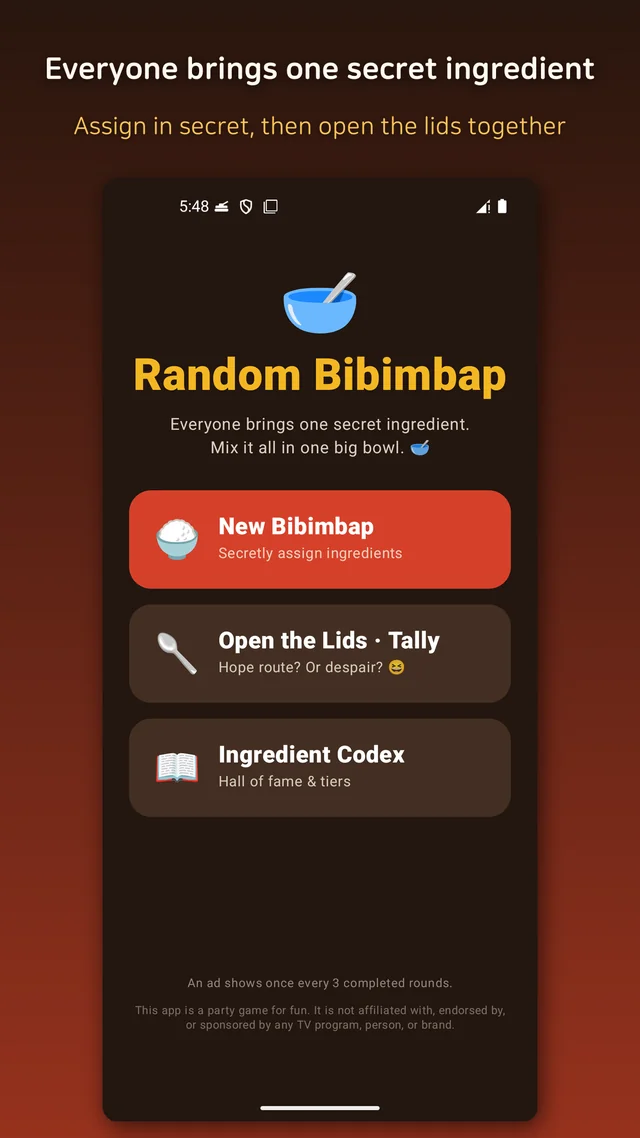
Setup takes under a minute. Pick the number of people, from 2 to 10. Then pick a mode.
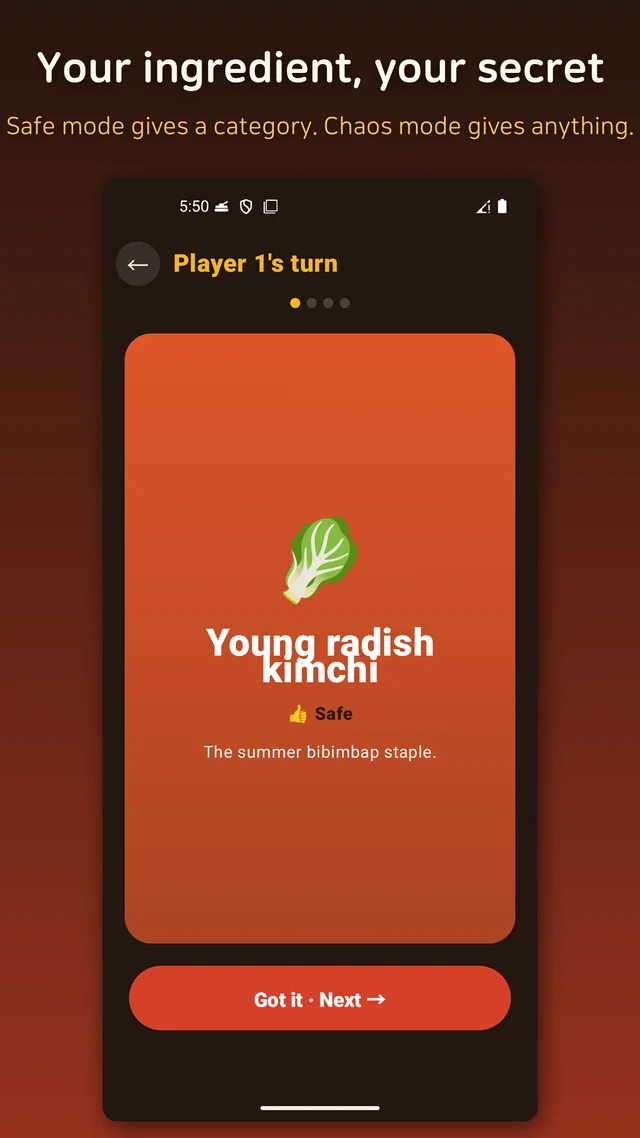
Safe mode secretly assigns each person a category — rice, sauce, protein, vegetable, topping and so on. The app guarantees the essentials are covered, but which exact item you bring stays your own secret, so the reveal survives. Chaos mode assigns specific random ingredients with no safety net at all; overlaps and gaps are part of the fun, and you should go in expecting the despair route.
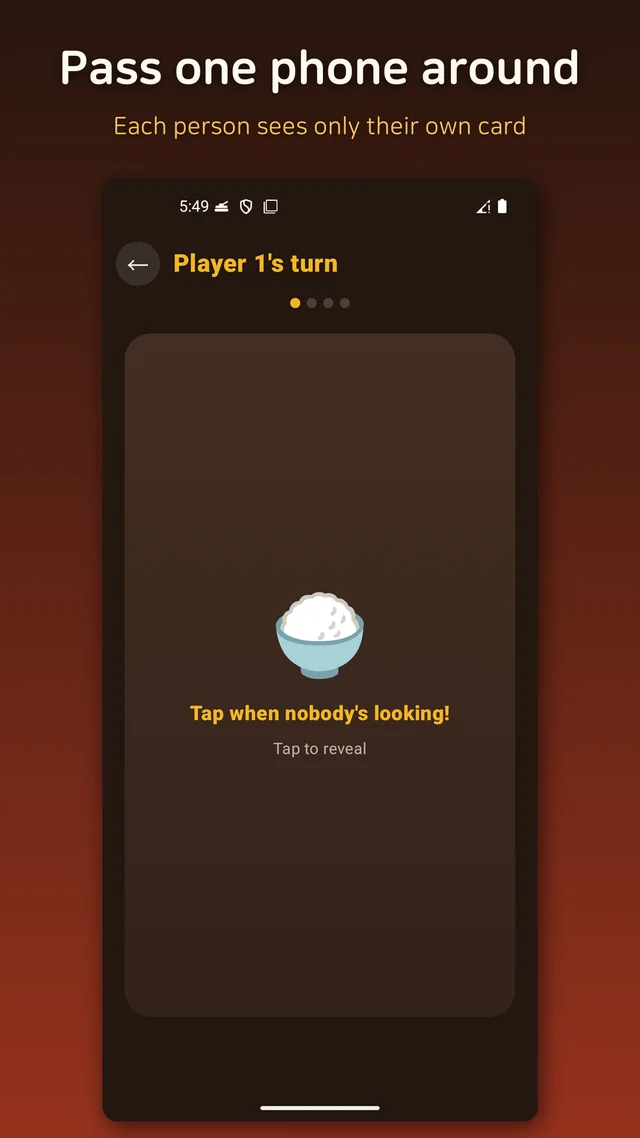
Then you pass one phone around. Each person taps to see their own card and nobody else's, the way you would deal roles in a Mafia-style party game. Afterwards a mission board shows only whether the essential categories were covered, never who has what. Screenshot it into the group chat and that is your invitation.
Opening the lids: hope route or despair route
On the day, the tally screen is the payoff. Tap every ingredient that actually turned up and the app judges the bowl: hope route, just fine, or despair route. It also crowns the day's hero ingredient — the MVP — which in practice is usually whoever remembered the sesame oil or the bulgogi. The verdict becomes a result card you can save and share.
To be clear, the judgement is a party gag, not a nutrition score. It checks whether the essentials showed up and whether a hero ingredient is present, and that is all.
The ingredient codex, and the day the rules broke
There is a codex of 57 ingredients arranged in five tiers, from the hall of fame down to the ones that make the table go quiet. It exists because people kept asking "what should I bring?" and because it is funny to read on its own.
The first version of the app only had chaos mode. I thought the disasters were the point. Then a friend ran it for a group of ten and got seven vegetables and no rice, and the message I received afterwards taught me that most groups want one guaranteed decent meal and one chance at glory, not a coin flip every time. Safe mode came out of that message, and it is now what almost everyone uses.
Who this is for
- Office teams and school clubs who want a lunch that people talk about for a week
- Anyone organising a potluck who is tired of ending up with four salads
- Korean food fans who want to try the trend with friends who have never had bibimbap
- Groups of 2 to 10 with one phone between them
The app runs on your device only: no sign-up, no personal data, fully offline and free.
Download (Google Play, free): https://play.google.com/store/apps/details?id=com.thefacegood.randombibim
※ Random Bibimbap is a just-for-fun party game with no connection to any TV show, celebrity or brand.
If your group discovers a hero ingredient the codex has not heard of, tell me. The list grows from post-lunch reports, and the rule stays the same: bring one thing, mix them all, see what happens.


Comments
Post a Comment